


Machine learning to predict how fast biodegradable plastics break down in nature
Researchers at the Agricultural University of Athens continue to validate the predictive model that estimates the biodegradation of PHBV bioplastics, cutting reliance on slow, costly lab testing.
Testing how quickly a biodegradable plastic actually breaks down in the environment can take months, sometimes years, of lab work. A new study from our partner, the Agricultural University of Athens, offers a faster alternative: a machine learning tool that predicts biodegradation outcomes for a widely used bioplastic almost instantly.
The research, published in Polymers, focuses on PHBV (poly(3-hydroxybutyrate-co-3-hydroxyvalerate)), a biopolymer produced naturally by bacteria and considered a promising, non-microplastic-forming replacement for conventional fossil-based plastics, particularly valuable in settings like humanitarian crises where waste management infrastructure is limited.
The team, led by Chrysanthos Maraveas, built a curated database from 13 peer-reviewed studies spanning nearly three decades, capturing how PHBV formulations – with different additives, compositions, and environmental conditions – degrade over time, measured through CO2 evolution (mineralisation). The resulting dataset covered 93 experimental instances and more than 1,300 individual biodegradation measurements.
Two machine learning approaches, Random Forest and XGBoost, were trained on this data and tested against unseen experimental instances. Both achieved strong predictive accuracy, with R² values around 0.95–0.97 even on fully held-out data, meaning the models reliably generalise beyond the examples they were trained on.
Analysis of the models revealed that biodegradation time was, unsurprisingly, the strongest predictor, reflecting the fundamentally kinetic nature of the process. But temperature, the ratio of the polymer’s two building blocks (hydroxyvalerate and hydroxybutyrate), the degradation mechanism (particularly surface erosion), microbial community type and additive content all played meaningful secondary roles, confirming that biodegradation is governed by a complex interplay of material design and environmental conditions rather than time alone.
The Random Forest model has been made publicly available as a free, interactive web tool on the Jaqpot platform, allowing researchers and manufacturers to input formulation and environmental parameters and receive rapid biodegradation predictions, supporting a “safe-and-sustainable-by-design” approach to developing next-generation biodegradable materials.
Read the full article here
—
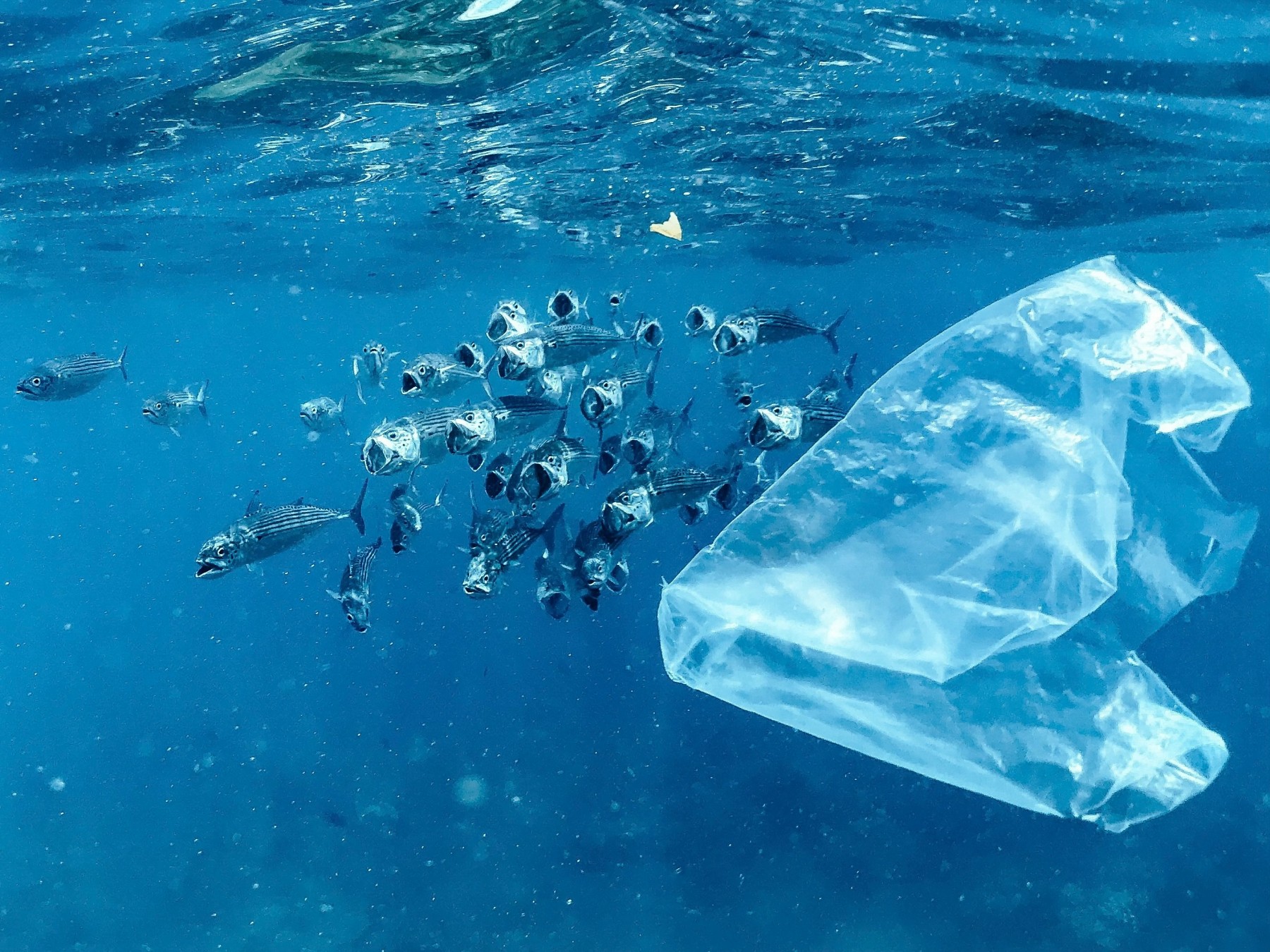
Cover photo by Naja Bertolt Jensen on Unsplash